



How Do Float Switches Work? A Complete Guide to Liquid Level Control
Float switches are one of the simplest and most reliable ways to monitor and control liquid levels in tanks, sumps, and vessels. Whether you’re protecting your basement from flooding, automating a wastewater system, or managing industrial process tanks, understanding how these devices work can help you choose the right solution for your application.
The Basic Principle
A float switch works using a straightforward mechanical principle: buoyancy. The device contains a float (usually a hollow ball or cylinder filled with air) that rises and falls with the liquid level in your tank. As the float moves, it activates an electrical switch inside the housing, which can then trigger pumps, valves, or alarms.
Think of it like a light switch, except instead of your finger flipping it on and off, the liquid level does the job automatically.
How the Switching Action Happens
Inside the float housing, there’s typically a magnetic reed switch or a mercury switch (in older models). As the float rises or falls, a magnet moves closer to or farther from the reed switch, causing it to open or close the electrical circuit. This switching action can be configured as normally open (NO) or normally closed (NC), depending on your application needs.
For pump control applications, you might use a normally open switch that closes when the liquid reaches a high level, turning on a pump to drain the tank. Or in a fill application, you’d use the opposite configuration to stop a pump once the tank reaches the desired level.
Common Float Switch Types
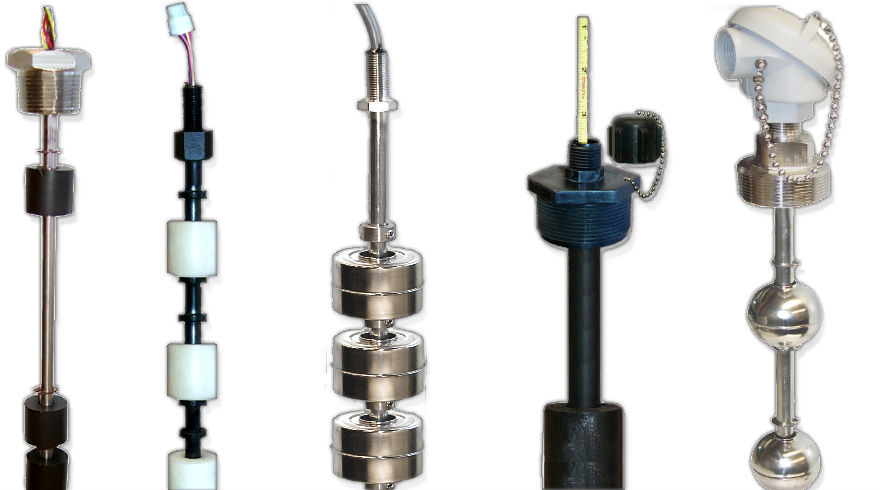
Vertical Float Switches hang down from the top of your tank with the float moving up and down along a stem. These work well in tanks with vertical clearance and where you need precise level control.
Horizontal Float Switches (also called tilt switches) are mounted through the side of the tank. The float pivots on a hinge as the liquid level changes, making them ideal for shallow tanks or applications with limited vertical space.
Multi-Level Float Switches use multiple floats on a single stem to provide several switching points. This is perfect when you need both high and low level alarms, or want to control multiple pumps for different tank levels.
Why Float Switches Are So Popular
Float switches remain one of the most widely used level control devices because they offer several advantages:
- Reliability – With few moving parts and no electronic components exposed to the liquid, float switches can operate for years with minimal maintenance
- Versatility – They work with virtually any liquid, from clean water to corrosive chemicals (when properly specified)
- No Power Required at the Sensor – The switch is purely mechanical, so there’s no need for external power at the tank
- Cost-Effective – Compared to ultrasonic or capacitance sensors, float switches offer excellent performance at a lower price point
Choosing the Right Materials
The material of your float switch matters significantly. For water applications, polypropylene floats work well. But if you’re monitoring chemicals, oils, or high-temperature liquids, you’ll need to specify materials that are compatible with what’s in your tank. Stainless steel floats handle aggressive chemicals and hot liquids, while specialized plastics like PVDF or PTFE work for specific chemical applications.
This is why it’s important to answer the question: “What’s in your tank?” The wrong material choice can lead to premature failure, but the right specification ensures years of trouble-free operation.
Applications Across Industries
Float switches show up everywhere:
- Sump pump control in basements and commercial buildings
- Wastewater treatment plants managing multiple tank levels
- Food and beverage processing for ingredient tanks and CIP systems
- HVAC systems controlling condensate removal
- Agricultural irrigation and livestock watering systems
- Marine bilge pump control
Making Float Switches Work for Your Application
While the basic principle is simple, optimizing a float switch installation requires thinking through several factors: Where in the tank should the switch be mounted? What start and stop points do you need? What happens if the switch fails? These are questions best addressed before installation.
For more specific guidance on selecting and installing float switches, our team can help you specify the right product for your exact application. We manufacture all our liquid level switches here in the USA with no minimum orders and fast turnaround, because we know that when you need level control, you need it quickly and you need it right.